
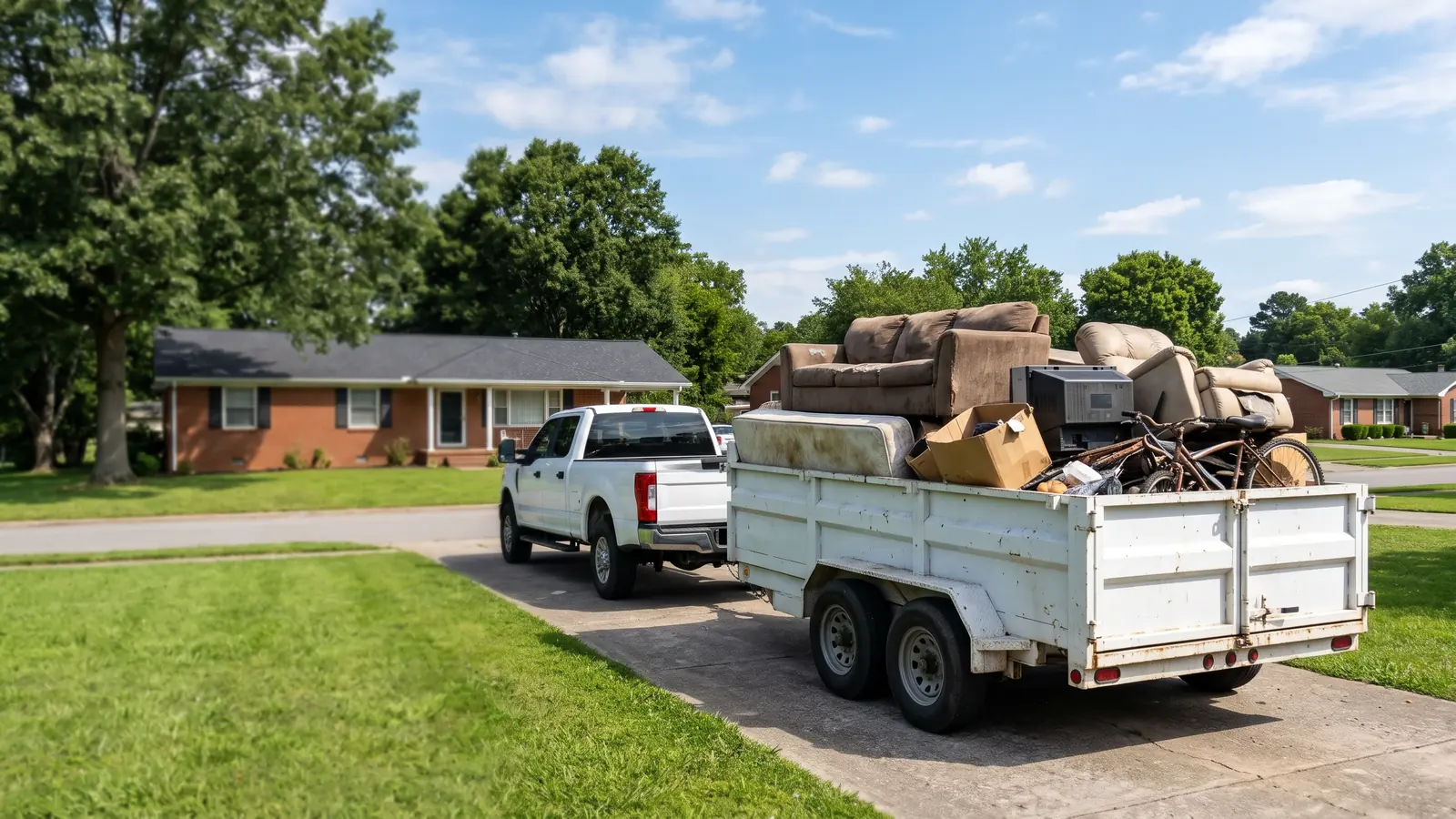
Office Furniture Removal by Piece
Most office jobs are a few hundred square feet of the same things: workstations, seating, storage and a dead copier, and every one of them leaves the building a different way.
Cubicles and Panel Systems
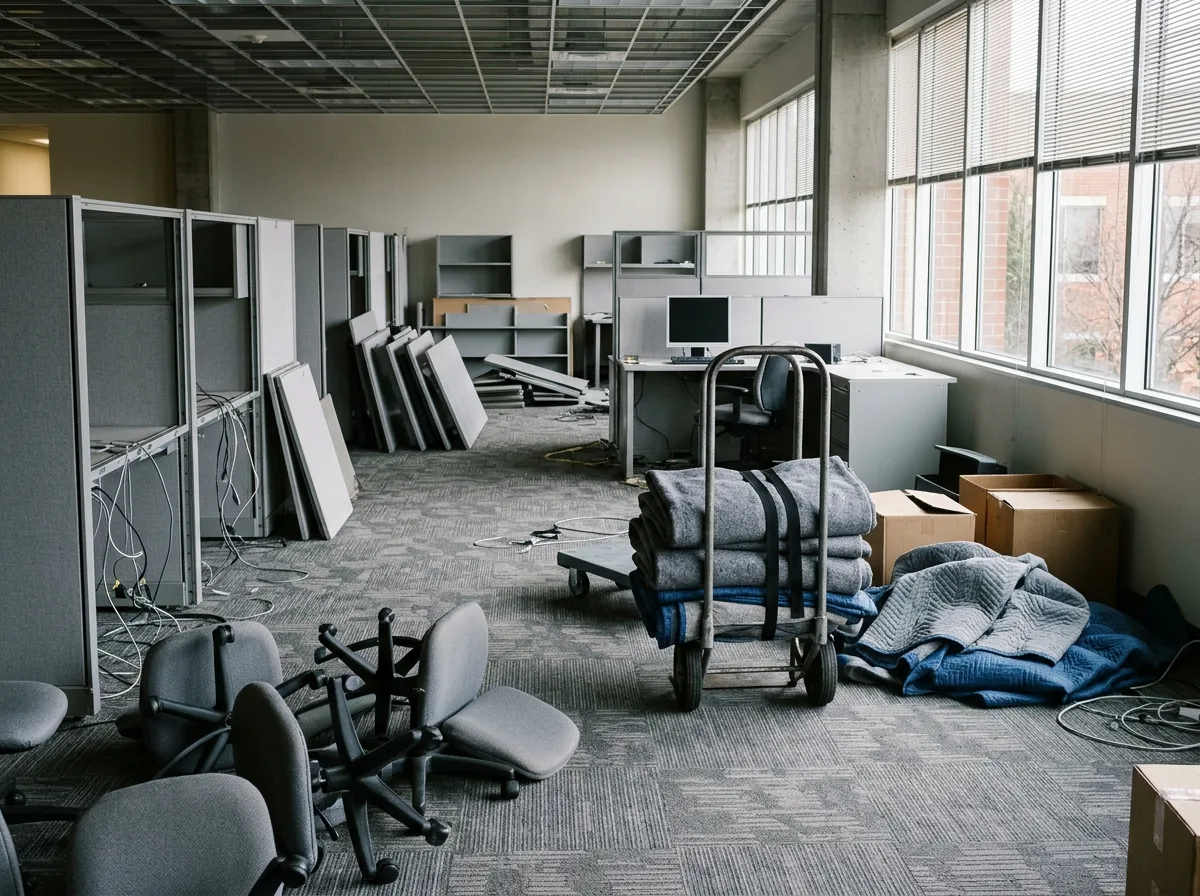
Cubicles leave as stacks of panels, worksurfaces, overhead bins and connector hardware. Ask whether the hauler will take them apart or expects them broken down. If the panels carry power, have the building's electrician disconnect the base feeds first. Panels are light but awkward, and a floor of workstations takes up more truck space than people expect.
Desks, Conference Tables and Reception Counters
Desks with returns, long conference tables and built-in reception counters usually need the legs or the return taken off before they'll fit through an office door. Measure the elevator if you're on an upper floor. The Clarksville ReStore lists desks and office furniture among the things it accepts, but it refuses executive and L-shaped desks, so plan on those going in the truck. Furniture donation pickup has the rest of its list.
Office Chairs and Filing Cabinets
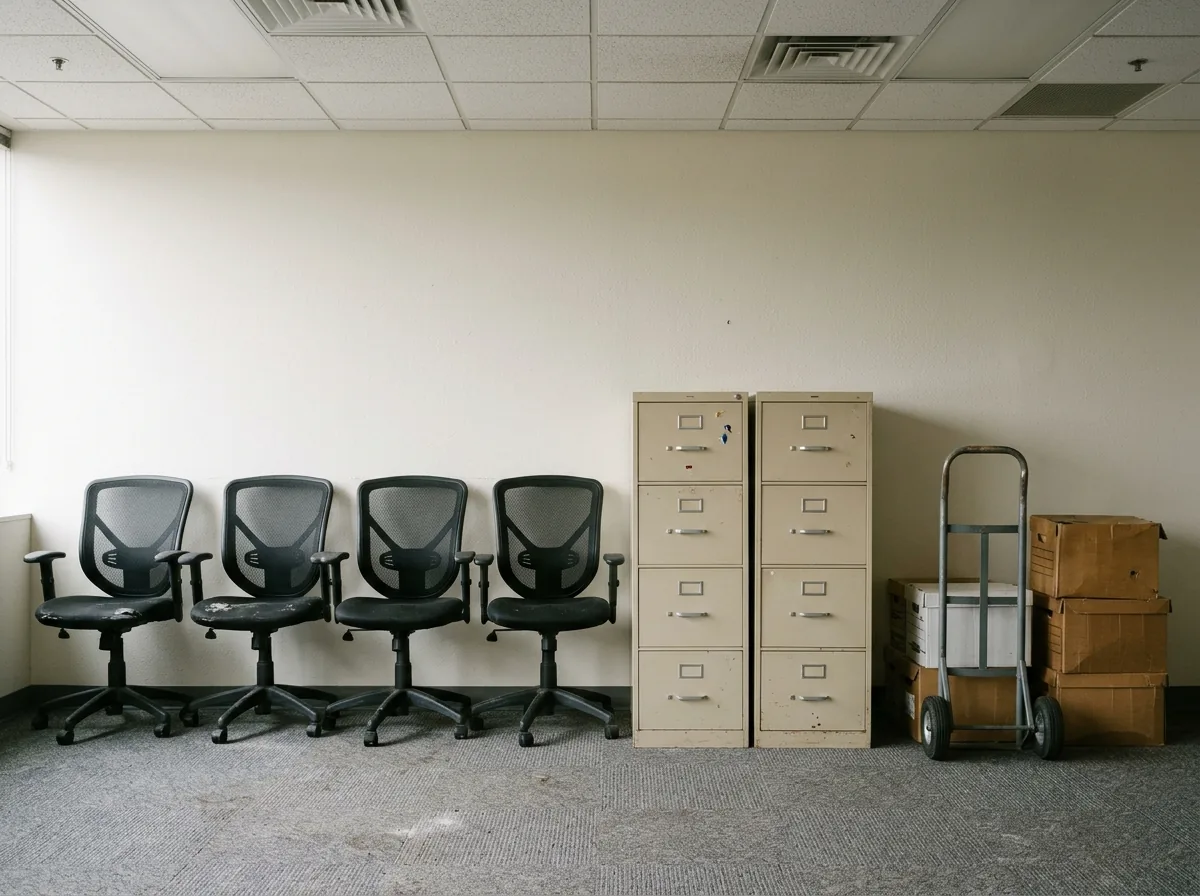
Chairs stack in fast. Metal filing cabinets are heavy, and they're steel, so they often end up at a scrap yard rather than the landfill (see scrap metal pickup). The ReStore accepts office chairs and file cabinets in sellable shape. Empty every drawer, and find the keys to the locked ones before the crew shows up.
Copiers, Computers and Server Gear
Monitors, towers, printers and copiers are e-waste, which has its own drop-off rules. See TV and electronics disposal. Pull or wipe the hard drives first. Check whether the copier is leased: a leased machine goes back to the dealer, not onto a junk truck. If you own it, remember the FTC's warning that a digital copier's hard drive keeps data on what it copied, scanned and faxed, and that deleting files doesn't remove them.

Why Clarksville homeowners call Clarksville Junk Haulers
- Your request goes to one local hauler, not a call list
- Ask for the all-in price before anything is loaded
- Free to call; you pay only the hauler, for the job you agree to
- Tell us about stairs, heavy items or a deadline up front
Office Cleanout Prep: Files, Drives and Keys
Paper records
The FTC Disposal Rule says anyone holding consumer information for a business purpose must dispose of it with reasonable measures, such as burning, pulverizing or shredding. Shred files before the cabinets go, or hire a record-destruction company. The rule allows that if you check them out first.Hard drives
The same rule lists destroying or erasing electronic media. Do it before any computer or copier goes on a truck.Building access
Reserve the freight elevator and the loading dock with the property manager, and tell the hauler which entrance to use.Lease deadline
Give the hauler your move-out date. A landlord's walk-through usually wants the suite empty and swept, not half-cleared.
What Changes an Office Furniture Removal Price
Floors and elevators
Angi's furniture guide notes that carrying pieces out of a building without a freight elevator, or down narrow stairs, adds to the bill. Book the freight elevator if the building has one.Assembled or broken down
A crew that has to unbolt a floor of cubicles or take the returns off desks spends more time on site than one that finds everything flat and stacked by the door.Steel content
Filing cabinets, metal desks and shelving can lower the price if the hauler takes them to a scrap yard. Ask whether that's reflected in the quote.What leaves first
Chairs and file cabinets the ReStore accepts can go out as donations before the truck comes, so they don't take up paid space.
See commercial junk removal for retail fixtures, break rooms and warehouse racking.